9th Grade  Lesson 45 minutes

Farming Fixers: Infographics for Cleaner Waters

Donovan H
HS-LS2-7
HS-ESS3-3
HS-ESS3-4
1-pager

Purpose

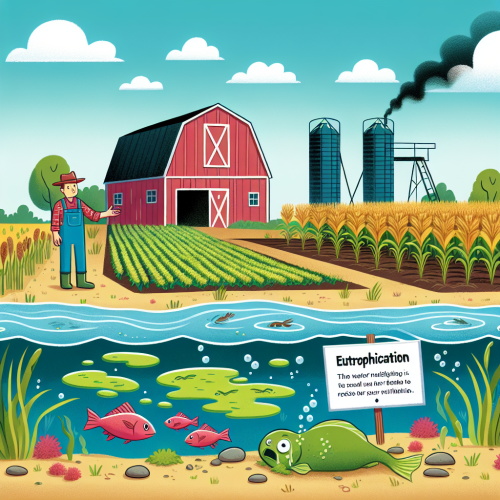
Students will explore the environmental impacts of agricultural practices, specifically focusing on nutrient runoff and its role in creating eutrophication and dead zones. Through engaging with local farmers and businesses, they will gain insights into current practices and challenges. The purpose is to equip students with the knowledge and skills to design persuasive infographics that advocate for sustainable farming practices, encouraging community stakeholders to adopt strategies that reduce nutrient runoff and protect aquatic ecosystems.

Learning goals

Students will investigate the environmental impact of agricultural practices, specifically focusing on nutrient runoff and its role in causing eutrophication and dead zones. They will develop skills in designing and evaluating solutions to mitigate these impacts, aligning with environmental and biodiversity standards. Through community engagement, students will enhance their understanding of real-world challenges and motivations behind farming practices. They will create and refine infographics to effectively communicate their findings and proposed solutions to the public, fostering critical thinking and persuasive communication skills.
Standards
  • [Next Generation Science Standards] HS-LS2-7 - Design, evaluate, and refine a solution for reducing the impacts of human activities on the environment and biodiversity.
  • [Next Generation Science Standards] HS-ESS3-3 - Create a computational simulation to illustrate the relationships among management of natural resources, the sustainability of human populations, and biodiversity.
  • [Next Generation Science Standards] HS-ESS3-4 - Evaluate or refine a technological solution that reduces impacts of human activities on natural systems.

Products

Students will create infographics that clearly illustrate the causes and effects of nutrient runoff from agricultural practices, along with actionable solutions for farmers and businesses to reduce their impact. They will also organize and lead a community workshop to present these infographics, facilitating discussions and collecting feedback to refine their communication strategies. This hands-on approach will culminate in a public exhibition where students showcase their work and engage with community members to promote sustainable practices.

Launch

Begin with an interactive simulation where students observe the effects of nutrient runoff on a digital model of a local waterway, witnessing the formation of dead zones in real-time. Follow this with a brief discussion on their initial observations and questions. Invite a local farmer to share firsthand experiences and challenges related to nutrient management, setting the stage for students to explore solutions collaboratively.

Exhibition

Students will host a community exhibition event where they present their infographics to the public, including local farmers, business owners, and community members. During the event, students will engage in discussions with attendees, explaining the causes of eutrophication and dead zones and proposing actionable solutions to reduce nutrient runoff. They will collect feedback from the audience to refine their communication strategies and enhance the effectiveness of their infographics. This exhibition will serve as a platform for students to demonstrate their learning and advocate for environmental change within their community.