About Us Impact News Pricing Contact Us Explore
Make a copy
About Us Impact News Pricing Contact Us Explore
Tools
Project-Based Learning Performance Assessment Student-Led Conferences Digital Portfolios
HTH GSE Kaleidoscope
Personalize your design more by filling out the framework elements.
Designed by the Professional Learning team at the High Tech High Graduate School of Education.
Learn more
Essential Question
What question will guide the project and learning?
Community Partners
What organizations and individuals will collaborate and enhance the learning experience?
Reflection
What opportunities are there for us to reflect on our academic and socio-emotional development?
Assessment
In what ways can we demonstrate what we have learned and how we have grown?
Exhibition
How and who will we celebrate our learning with?
Project Launch
What shared experiences will engage us in the content, skills, and mindsets of the project?
Core Content
What will we need to learn and practice in order to engage in the project?
Critique and Revision
How will opportunities for feedback and refinement be embedded in the project?
Product
What will we make, build, or do that will have an impact on us or the world around us?
Next
What question will guide the project and learning?

(1) What countries are represented at ASF?How
(2) What role do cultural traditions play in shaping our school community's identity?
(3) In what ways can we create a more inclusive environment that respects and honors all cultures at our school?
(4) How can we use our understanding of different cultures to build stronger connections within our school community?

    Design for Mastery Kit
    NEW
5th Grade  Project 6 weeks

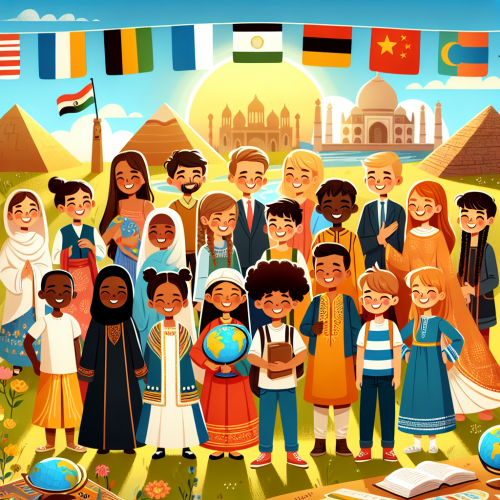
Cultural Kaleidoscope: Our School's Global Tapestry

Gretchen E
CCSS.ELA-Literacy.L.5.1
CCSS.ELA-Literacy.L.5.2
CCSS.ELA-Literacy.L.5.3
CCSS.ELA-Literacy.W.5.2
CCSS.ELA-Literacy.W.5.5
+ 5 more
1-pager

Purpose

Week 1: Introduce the project and essential questions, and begin researching personal and peer cultural backgrounds. Week 2: Continue research and start drafting informative texts about cultural traditions. Week 3: Develop narratives based on cultural experiences and receive peer feedback. Week 4: Revise and refine narratives and presentations. Week 5: Prepare for the culture fair by finalizing presentations and practicing delivery. Week 6: Host the culture fair for the school community, followed by reflection and discussion on inclusivity and cultural connections.

Learning goals

Week 1: Introduction to the project and exploration of personal cultural backgrounds. Students will begin researching their own cultures, focusing on history, traditions, and cuisine. Week 2: Students continue their research and start drafting their presentations. Peer and teacher feedback sessions will be conducted to guide revisions and improvements. Week 3: Students refine their presentations, incorporating feedback and practicing their speaking skills. They will also explore the cultural backgrounds of classmates to understand diversity within the school. Week 4: Students finalize their presentations and prepare for the culture fair. They will work collaboratively to address how cultural traditions impact the school community. Week 5: Students participate in a mock exhibition to practice presentation skills and receive final feedback. They will also brainstorm and propose ideas for fostering a more inclusive school environment. Week 6: Students present their cultural findings at the culture fair, engaging with the entire school community and parents. They reflect on the experience and discuss how understanding different cultures can strengthen community connections.
Standards
  • [Common Core] CCSS.ELA-Literacy.L.5.1 - Demonstrate command of the conventions of standard English grammar and usage when writing or speaking.
  • [Common Core] CCSS.ELA-Literacy.L.5.2 - Demonstrate command of the conventions of standard English capitalization, punctuation, and spelling when writing.
  • [Common Core] CCSS.ELA-Literacy.L.5.3 - Use knowledge of language and its conventions when writing, speaking, reading, or listening.
  • [Common Core] CCSS.ELA-Literacy.W.5.2 - Write informative/explanatory texts to examine a topic and convey ideas and information clearly.
  • [Common Core] CCSS.ELA-Literacy.W.5.5 - With guidance and support from peers and adults, develop and strengthen writing as needed by planning, revising, editing, rewriting, or trying a new approach.
  • [Common Core] CCSS.ELA-Literacy.RI.5.5 - Compare and contrast the overall structure (e.g., chronology, comparison, cause/effect, problem/solution) of events, ideas, concepts, or information in two or more texts.
  • [Common Core] CCSS.ELA-Literacy.W.5.3 - Write narratives to develop real or imagined experiences or events using effective technique, descriptive details, and clear event sequences.
Competencies
  • Self Directed Learning - Students use teacher and peer feedback and self-reflection to monitor and direct their own learning while building self knowledge both in and out of the classroom.
  • Academic Mindset - Students establish a sense of place, identity, and belonging to increase self-efficacy while engaging in critical reflection and action.
  • Critical Thinking & Problem Solving - Students consider a variety of innovative approaches to address and understand complex questions that are authentic and important to their communities.

Products

Week 1: Introduction to the project and brainstorming session where students identify their own cultural backgrounds and those of their peers. Begin research on cultural traditions and history. Week 2: Continue research and start drafting personal reflections on cultural identity. Engage in peer feedback sessions to refine ideas. Week 3: Develop creative presentations, incorporating artifacts, stories, and traditions. Receive teacher feedback and make necessary revisions. Week 4: Prepare for the cultural fair by finalizing presentations and practicing public speaking skills. Week 5: Conduct a dress rehearsal for the cultural fair, allowing students to present to classmates and receive final feedback. Week 6: Host the cultural fair and exhibition, where students present their portfolios to the school community and parents, fostering dialogue and understanding about cultural awareness and inclusivity.

Launch

Day 1: Begin with an "Introduction Circle," where students share a brief cultural fact or tradition from their background. Day 2: Host a "Cultural Artifact Gallery Walk," where students display personal artifacts and share their significance with peers. Day 3: Organize a "Cultural Tasting and Music Session," inviting students to bring a traditional dish or song to share, fostering an immersive cultural experience. Each day will include reflection time for students to connect these experiences to the essential questions and their role in the school community.

Exhibition

Day 1-3: Students set up interactive booths, each focusing on a different culture represented at ASF, featuring researched history, traditional foods, and significant cultural events. Day 4-5: Students rehearse their presentations, incorporating peer feedback to refine their delivery and ensure clarity and engagement. Day 6: Host the Culture Fair, where students present to the school community and parents, facilitating discussions that emphasize cultural traditions' role in shaping school identity and fostering inclusivity.
Learning Journey
No learning journey yet!
Plan

No plan yet

Create a Learning Journey first to generate your activity plan. The plan view will show your activities organized by day and week.

Share
Loading
Loading
Get it on Google Play
© 2026 Inkwire Inc
Contact Us Privacy Policy Terms of Service