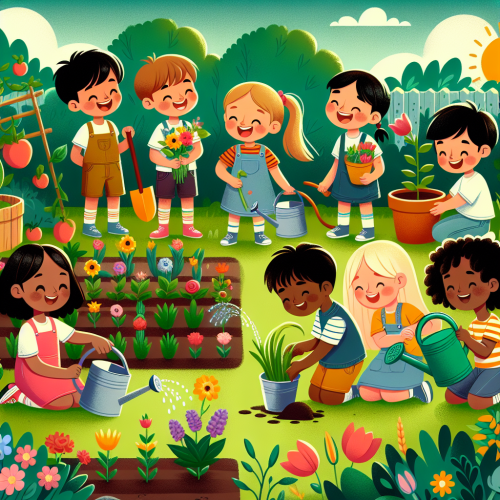
Students in grades 2 through 5 will engage in a hands-on project to design and maintain a sustainable school garden, integrating eco-friendly practices such as recycling and upcycling. Collaborating with local experts and community members, students will explore creative solutions to environmental challenges, strengthening their critical thinking and problem-solving skills. This project will foster a sense of identity and belonging as students actively contribute to their community's sustainability efforts, meeting educational standards and competencies through self-directed learning and academic reflection.
Learning goals
Students will collaboratively design and implement a sustainable school garden, using recycled materials to enhance environmental awareness and creativity. They will engage with local experts to learn eco-friendly practices, fostering community involvement and responsibility. Through self-directed learning and critical reflection, students will assess the garden's impact on reducing waste and promoting sustainability. This project will develop problem-solving skills and a strong academic mindset, aligning with Next Generation Science Standards and National Council for the Social Studies competencies, and is tailored for grades 2 through 5.
Standards
[Next Generation Science Standards] 5-ESS3-1 - Obtain and combine information about ways individual communities use science ideas to protect the Earth's resources and environment.
[Next Generation Science Standards] MS-ESS3-3 - Apply scientific principles to design a method for monitoring and minimizing a human impact on the environment.
[National Council for the Social Studies] D4.7.3-5 - Explain different strategies and approaches students and others could take in working alone and together to address local, regional, and global problems, and predict possible results of their actions.
Competencies
Self Directed Learning - Students use teacher and peer feedback and self-reflection to monitor and direct their own learning while building self knowledge both in and out of the classroom.
Academic Mindset - Students establish a sense of place, identity, and belonging to increase self-efficacy while engaging in critical reflection and action.
Critical Thinking & Problem Solving - Students consider a variety of innovative approaches to address and understand complex questions that are authentic and important to their communities.
Products
Students will design and build a sustainable school garden using recycled materials, documenting their journey through a digital portfolio that highlights their design, implementation, and maintenance strategies. They will create informational posters or videos to educate peers and the community about the benefits of eco-friendly gardening and recycling. Additionally, students will organize a community garden day event, where they will present their findings and collaborate with local experts to share insights on waste reduction and sustainability.
Launch
Kick off the project with a vibrant 'Garden Kickoff Picnic' where students, families, and community members gather to enjoy a meal made from local produce. This event will feature planting activities and interactive stations focused on composting, recycling, and upcycling. Local gardening experts will demonstrate eco-friendly practices, guiding students in brainstorming ways to incorporate these methods into the garden's design. Conclude with a collaborative planting session, empowering students to take ownership of specific garden areas and plan their maintenance strategies, ensuring activities are engaging and suitable for grades 2nd through 5th.
Exhibition
Students will organize a "Sustainability Showcase" to present their garden projects and eco-friendly initiatives to peers, teachers, and community members. Each group will display their garden design, emphasizing the incorporation of recycled materials and the positive environmental impacts achieved. Interactive booths will engage visitors in activities like seed planting, composting demonstrations, and creating upcycled garden art. Community experts will join to offer feedback and share knowledge on sustainable practices. The event will close with a student-led reflection, discussing the project's influence on the community and environment.