High School Grade
Project
11 weeks
Sunny Shelters: Cool Solutions for San Diego
1-pager
Purpose
The purpose of this project is to engage high school students in a meaningful, real-world learning experience where they design and construct sustainable shade shelters for vulnerable communities in San Diego. Students will apply principles of science, engineering, and design to create innovative solutions that address the challenges of extreme heat. Through collaboration with community partners and professionals, students will develop critical thinking and problem-solving skills while contributing to climate resilience and equity in their local community.
Learning goals
Students will develop skills in woodworking, solar energy integration, and sustainable design by constructing shade shelters that address extreme heat conditions. They will engage in critical thinking and problem-solving to evaluate and refine their designs based on real-world constraints and community feedback. Through collaboration with community partners, students will gain insights into environmental challenges and innovative solutions, fostering a deeper understanding of climate resilience. Additionally, students will enhance their self-directed learning by utilizing feedback and reflection to guide their project development and personal growth.
Standards
- [Next Generation Science Standards] HS-LS4-6 - Create or revise a simulation to test a solution to mitigate adverse impacts of human activity on biodiversity.
- [Next Generation Science Standards] HS-PS3-3 - Design, build, and refine a device that works within given constraints to convert one form of energy into another form of energy.
- [Next Generation Science Standards] HS-ESS3-2 - Evaluate competing design solutions for developing, managing, and utilizing energy and mineral resources based on cost-benefit ratios.
Competencies
- Self Directed Learning - Students use teacher and peer feedback and self-reflection to monitor and direct their own learning while building self knowledge both in and out of the classroom.
- Academic Mindset - Students establish a sense of place, identity, and belonging to increase self-efficacy while engaging in critical reflection and action.
- Critical Thinking & Problem Solving - Students consider a variety of innovative approaches to address and understand complex questions that are authentic and important to their communities.
Products
Students will design and build modular shade shelters that incorporate sustainable materials and solar-powered fans, providing cooling solutions for hot areas in San Diego. These structures will be portable and easy to assemble, allowing for flexibility in deployment across different locations. Additionally, students will create artistically designed shade structures that reflect local cultural elements, serving as functional cooling spaces and public art installations to promote community engagement and awareness of climate resilience.
Launch
Kick off the project with an immersive 'Heat Experience Day' where students participate in a series of interactive stations that simulate extreme heat conditions and explore the challenges faced by vulnerable communities. Incorporate virtual reality experiences, hands-on activities, and expert talks to deepen understanding of the local climate impact. This engaging launch will set the stage for students to connect personally with the project's purpose and inspire innovative thinking in designing sustainable shade shelters.
Exhibition
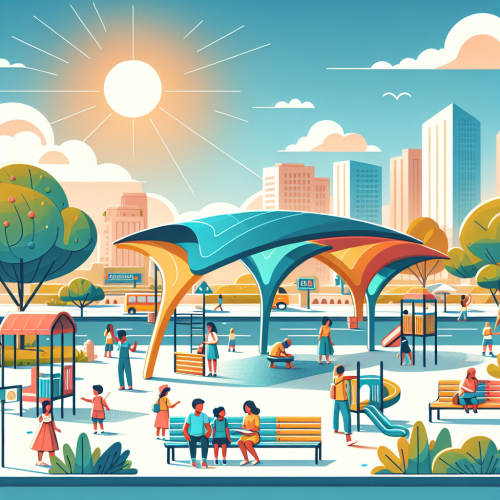
Organize the 'Cool Creations Expo' at a local park, where students display their completed shade shelters to community members, environmental organizations, and local government officials. Include interactive demonstrations of the solar-powered cooling systems to engage attendees and highlight the shelters' innovative features. Conclude with a ribbon-cutting ceremony for one of the structures, symbolizing the project's impact and celebrating students' contributions to climate resilience.
Learning Journey
Project Activities
Project Activities
Days 1 - 55
Project Launch: Heat Experience Day
Activity
50m
Introduction to Climate Impact
Activity
25m
Essential Question Exploration
Activity
25m
Design Sprint Workshop
Activity
50m
Understanding Heat Transfer and Insulation
Activity
30m
Research on Sustainable Designs
Activity
20m
Workshop with Local Environmental Organization
Activity
50m
Woodworking Basics Workshop
Activity
50m
Introduction to Solar Energy
Activity
25m
Interactive Solar Panel Demonstration
Activity
25m
Heat Transfer and Insulation Experimentation
Activity
50m
Collaborative Design Session
Activity
50m
Design Reflection and Feedback
Activity
25m
Preparation for Mid-Project Feedback Session
Activity
25m
Mid-Project Feedback Session
Activity
50m
Feedback Reflection and Design Revision
Activity
50m
Advanced Woodworking Techniques
Activity
50m
Solar Panel Integration Workshop
Activity
50m
Prototype Testing Preparation
Activity
50m
Design Critique Preparation
Activity
25m
Peer Feedback Session
Activity
25m
Community Partner Feedback Integration
Activity
30m
Reflective Journaling
Activity
20m
Prototype Construction Begins
Activity
50m
Prototype Construction Continues
Activity
50m
Prototype Testing Day
Activity
50m
Structural Refinement Workshop
Activity
25m
Cooling Technique Exploration
Activity
25m
Material Testing and Selection
Activity
30m
Design Documentation Update
Activity
20m
Advanced Solar Integration Session
Activity
50m
Collaborative Reflection and Problem Solving
Activity
25m
Digital Portfolio Update
Activity
25m
Final Prototype Construction
Activity
50m
Final Construction Phase
Activity
50m
Solar System Installation
Activity
30m
Cooling Efficiency Testing
Activity
20m
Structural and Cooling Systems Review
Activity
30m
Digital Portfolio Update
Activity
20m
Preparation for Final Exhibition
Activity
25m
Feedback Session with Peers
Activity
25m
Exhibition Rehearsal
Activity
30m
Final Adjustments
Activity
20m
Feedback Analysis and Design Refinement
Activity
25m
Material Sourcing Strategy
Activity
25m
Renewable Energy System Optimization
Activity
50m
Cooling System Enhancement Workshop
Activity
30m
Design Documentation Update
Activity
20m
Final Prototype Construction
Activity
50m
Construction and Quality Assurance
Activity
50m
Design Finalization and Review
Activity
30m
Material Inventory Check
Activity
20m
Final Construction Phase
Activity
50m
Quality Assurance and Testing
Activity
30m
Problem-Solving Session
Activity
20m
Detailing and Finishing Touches
Activity
25m
Digital Portfolio Update
Activity
25m
Exhibition Preparation
Activity
50m
Final Construction Touch-Ups
Activity
30m
System Functionality Review
Activity
20m
Community Impact Presentation Prep
Activity
30m
Peer Review Session
Activity
20m
Mock Exhibition Run
Activity
30m
Feedback and Refinement
Activity
20m
Final Exhibition Setup
Activity
25m
Cultural Integration Review
Activity
25m
Final Reflection and Portfolio Update
Activity
30m
Preparation for Exhibition Day
Activity
20m
Final Construction and Assembly
Activity
30m
Solar System Finalization
Activity
20m
Exhibition Presentation Refinement
Activity
25m
Feedback Session with Mentors
Activity
25m
Final Quality Assurance
Activity
30m
Exhibition Strategy Planning
Activity
20m
Cultural Elements Integration
Activity
25m
Digital Portfolio Completion
Activity
25m
Cool Creations Expo Setup
Activity
50m
No activities have been added to this phase yet.
Plan
No activities yet
Your Learning Journey has phases but no activities. Go to the Learning Journey tab to add activities to your phases.