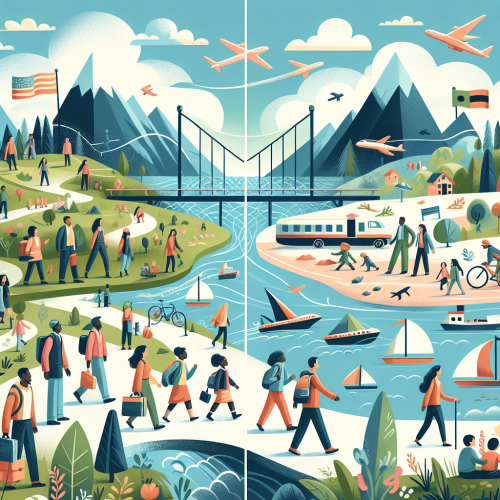
Students will engage in a hands-on learning experience that connects real-world population challenges to their local community. Through the development and presentation of a community action plan, students will critically analyze and address issues such as migration, resource allocation, and cultural diversity. This project fosters self-directed learning, critical thinking, and a sense of belonging, as students collaborate with peers and local stakeholders to create meaningful solutions.
Learning goals
Students will develop a comprehensive understanding of how cultural, economic, and environmental factors drive migration patterns and influence population distribution. They will critically evaluate spatial distribution reasons and analyze environmental impacts on population movements. Through creating a community action plan, students will apply critical thinking to address local population challenges, fostering self-directed learning and academic mindset. They will engage in reflective practices to deepen their understanding of population trends and their implications for future planning.
Standards
[Kentucky] HS.G.MM.1 - Analyze how cultural, economic and environmental factors contribute to migration patterns and population distribution at multiple scales.
[Kentucky] HS.G.MM.2 - Evaluate reasons for the spatial distribution of human populations at different scales on Earth's surface.
[Kentucky] HS.G.GR.2 - Analyze how environmental factors influence population distributions from place to place.
Competencies
Self Directed Learning - Students use teacher and peer feedback and self-reflection to monitor and direct their own learning while building self knowledge both in and out of the classroom.
Academic Mindset - Students establish a sense of place, identity, and belonging to increase self-efficacy while engaging in critical reflection and action.
Critical Thinking & Problem Solving - Students consider a variety of innovative approaches to address and understand complex questions that are authentic and important to their communities.
Products
Students will create a comprehensive community action plan addressing a local population-related challenge, such as housing shortages or resource allocation. This plan will be presented to local stakeholders for feedback, allowing students to engage with real-world issues and gain insights from community experts. Additionally, students will compose a reflective essay analyzing their evolving understanding of population distribution and migration, incorporating peer feedback and self-assessment. The project will culminate in a gallery walk where students showcase their findings and reflections, facilitating peer and teacher feedback and fostering diverse perspectives.
Launch
Kick off the project with an interactive simulation where students assume roles as city planners tasked with addressing a sudden influx of migrants into their community. They must quickly assess the impact on housing, resources, and cultural dynamics, and propose initial solutions. This activity will immerse students in real-world challenges, prompting them to think critically about population distribution and migration issues from the outset.
Exhibition
Students will organize a community showcase event where they present their community action plans addressing local population challenges. This event will include interactive displays and presentations to engage local stakeholders, such as city planners, community leaders, and family members. Attendees will provide feedback and engage in discussions, allowing students to refine their ideas and consider diverse perspectives. This exhibition will also feature a gallery walk where students share their reflective essays and insights gained throughout the project, fostering a deeper understanding of population dynamics and migration.