About Us Impact News Pricing Contact Us Explore
Make a copy
About Us Impact News Pricing Contact Us Explore
Tools
Project-Based Learning Performance Assessment Student-Led Conferences Digital Portfolios
HTH GSE Kaleidoscope
Personalize your design more by filling out the framework elements.
Designed by the Professional Learning team at the High Tech High Graduate School of Education.
Learn more
Essential Question
What question will guide the project and learning?
Community Partners
What organizations and individuals will collaborate and enhance the learning experience?
Reflection
What opportunities are there for us to reflect on our academic and socio-emotional development?
Assessment
In what ways can we demonstrate what we have learned and how we have grown?
Exhibition
How and who will we celebrate our learning with?
Project Launch
What shared experiences will engage us in the content, skills, and mindsets of the project?
Core Content
What will we need to learn and practice in order to engage in the project?
Critique and Revision
How will opportunities for feedback and refinement be embedded in the project?
Product
What will we make, build, or do that will have an impact on us or the world around us?
Next
What question will guide the project and learning?

How can understanding the key concepts of a specific child development theorist help in addressing the needs of children in various age groups?

    Design for Mastery Kit
    NEW
All grades  Lesson 90 minutes

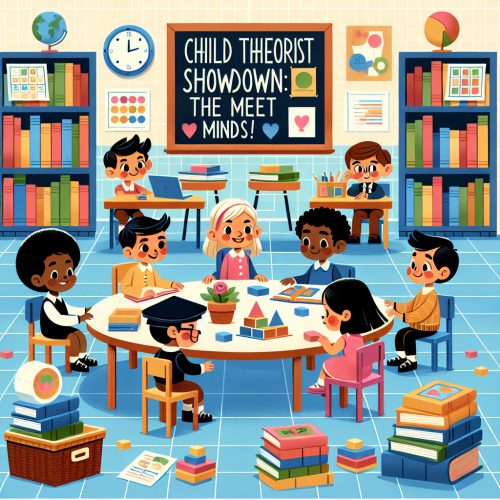
Child Theorist Showdown: Meet the Minds!

AMALA K
6.A
7.A
5.A
8.A
9.A
+ 3 more
1-pager

Purpose

Over three 90-minute class periods, students will engage in a hands-on research project to explore the theories of a renowned child development theorist. By investigating the theorist's key concepts, students will analyze how these ideas address the developmental needs of children across various age groups. This project encourages critical thinking, self-directed learning, and collaboration, as students synthesize information and present their findings in a creative format, such as a gallery walk or a deck of cards. Through this process, students will deepen their understanding of child development and its practical applications in real-world contexts.

Learning goals

Students will research and analyze the key concepts of a famous child development theorist, focusing on how these concepts apply to the developmental needs of children across various age groups. Over three 90-minute class periods, they will create a visual or digital presentation that synthesizes their findings, which will be displayed for peer review and reflection. Through this project, students will develop critical thinking skills, engage in self-directed learning, and build an academic mindset by connecting theoretical knowledge to real-world applications.
Standards
  • [] 6.A - analyze the physical, emotional, social, intellectual, and moral developmental needs of children ages 13 months through 35 months
  • [] 7.A - analyze the physical, emotional, social, intellectual, and moral development needs of the children ages 3 through 5 years
  • [] 5.A - analyze the physical, emotional, social, intellectual, and moral developmental needs of children ages birth through twelve months
  • [] 8.A - analyze the physical, emotional, social, intellectual, and moral development needs of children ages 6 through 11 years
  • [] 9.A - summarize the physical, emotional, social, intellectual, and moral needs of children ages 12 through 19 years
Competencies
  • Self Directed Learning - Students use teacher and peer feedback and self-reflection to monitor and direct their own learning while building self knowledge both in and out of the classroom.
  • Academic Mindset - Students establish a sense of place, identity, and belonging to increase self-efficacy while engaging in critical reflection and action.
  • Critical Thinking & Problem Solving - Students consider a variety of innovative approaches to address and understand complex questions that are authentic and important to their communities.

Products

Students will create an informative digital poster or infographic that highlights the key concepts and contributions of their assigned child development theorist. This visual representation will include a brief biography, major theories, and their application to the developmental needs of children across various age groups. Students will also prepare a short presentation to share their findings and insights with the class during a gallery walk, facilitating peer-to-peer learning and discussion. Additionally, students will engage in a peer review session to provide feedback and refine their work, culminating in a collaborative digital presentation incorporating multimedia elements.

Launch

Begin with a dynamic "Who Am I?" activity where each student receives a card with a brief description of a child development theorist's key ideas and contributions. Students will mingle and ask each other questions to identify which theorist they represent. This interactive exercise sets the stage for deeper research and encourages students to actively engage with the theorists' concepts, fostering a sense of curiosity and connection to the subject matter. Extend this activity over the first class period to allow students ample time to explore and discuss, setting a collaborative tone for the subsequent sessions.

Exhibition

Students will create a visual presentation or digital poster summarizing the key concepts of their assigned child development theorist. They will include specific insights on how these theories address the developmental needs of children in various age groups. These presentations will be displayed in a gallery walk format, allowing peers to explore and engage with each other's work. Students will provide feedback and reflections on their peers' presentations, fostering a collaborative learning environment. This exhibition will conclude with a class discussion on the practical applications of these theories in real-world child development scenarios.
Learning Journey
Project Activities
Milestone Activities
No activities have been added to this phase yet.

Edit Phase

Loading...
Plan
Activities
Who Am I? Introduction
Activity
Who Am I? Activity
Activity
Who Am I? Activity
Activity
Who Am I? Introduction Activity
Activity
Research Workshop
Activity
Assignment of Theorists
Activity
Research Setup
Activity
Introduction to Research Project
Activity
Collaborative Research
Activity
Initial Research Session
Activity
Assign Theorists
Activity
Group Collaboration
Activity
Research Planning and Resource Gathering
Activity
Digital Poster Creation
Activity
Poster Creation
Activity
Peer Sharing
Activity
Guided Research Reflection
Activity
Peer Review Session
Activity
Community Partner Introduction
Activity
Feedback Session
Activity
Research and Note-taking
Activity
Introduction to Digital Tools
Activity
Self-Reflection
Activity
Research Planning
Activity
Preparation
Share
Loading
Loading
Get it on Google Play
© 2026 Inkwire Inc
Contact Us Privacy Policy Terms of Service