All grades
Project
2 weeks
"Energetic Ecosystems: Nature's Power Play!"
1-pager
Purpose
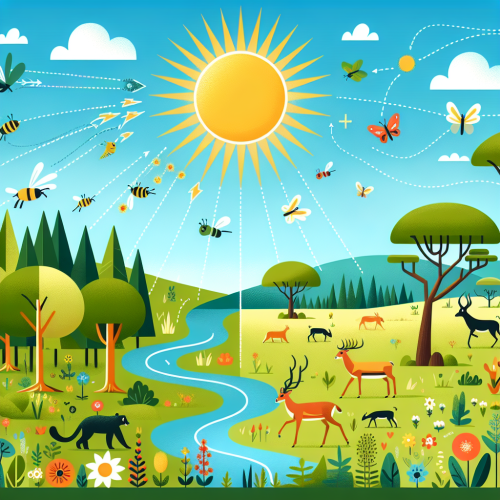
This project aims to immerse students in the dynamic world of ecosystems, fostering a deep understanding of how energy flow and matter cycles sustain life. Through hands-on activities, field trips, and community collaborations, students will explore the intricate relationships within ecosystems and the impact of human activities. They will develop critical thinking and scientific inquiry skills by engaging in real-world investigations and presenting their findings, ultimately contributing to local conservation efforts and enhancing their appreciation for biodiversity.
Learning goals
Students will develop a comprehensive understanding of how energy flow and matter cycles sustain life within ecosystems, and the consequences of disruptions to these processes. They will explore the role of natural selection and adaptation in shaping biodiversity over time, using real-world observations and data collection. Through hands-on activities and community partnerships, students will gain the ability to analyze ecosystem interactions, evaluate human impacts, and propose evidence-based solutions to enhance ecosystem health and resilience.
Products
Students will create interactive dioramas that showcase the energy flow and matter cycles within various ecosystems, incorporating their own models of organisms and their interactions. They will also produce a short documentary film that captures their field trip experiences, interviews with community partners, and scientific investigations, highlighting key findings about ecosystem dynamics. Additionally, students will construct a living ecosystem model in a terrarium or aquarium, demonstrating and explaining the relationships between organisms, energy flow, and matter cycles, including the effects of human intervention.
Launch
Begin the project with an 'Ecosystem Adventure Day' at a local park, where students embark on a scavenger hunt to identify organisms and their roles in energy flow and matter cycles. Students will use observation journals to document their findings and discuss how these elements contribute to the ecosystem's balance. This immersive experience sets the stage for understanding the interconnectedness of life within ecosystems and sparks curiosity for the upcoming project.
Exhibition
Students will host an 'Ecosystem Exploration Fair,' setting up interactive booths to showcase their experiments and findings on energy flow and matter cycles. Families and community partners will be invited to engage with hands-on activities and demonstrations. Additionally, students will present their citizen science data at a 'Community Science Showcase,' where they will discuss the implications of their research with community partners. The event will culminate in a 'Habitat Restoration Celebration,' featuring a live demonstration of restoration techniques and a collaborative art installation representing human impact on ecosystems.
Plan
| Week 1 |
Day 1
|
Day 2
|
Day 3
|
Day 4
|
Day 5
|
|---|---|---|---|---|---|
| Activities |
Ecosystem Adventure Day - Students embark on a scavenger hunt at a local park to identify organisms and their roles in energy flow and matter cycles, documenting findings in observation journals. (45 min)
|
Nature Detectives Workshop - Collaborate with local environmentalists to investigate disrupted ecosystems, analyzing causes and effects using case studies and guided discussions. (45 min)
|
Wildlife Wonders Expo - Meet with wildlife experts and engage in hands-on activities, such as building food webs and simulating predator-prey dynamics, to learn about ecosystem interactions. (45 min)
|
Modeling Energy Flow and Matter Cycles - Use models to illustrate and explain how processes in organisms contribute to the flow of energy and cycling of matter within an ecosystem. (45 min)
|
Exploring Ecosystem Dynamics - Apply mathematics and computational thinking to explain interactions between organisms, focusing on predator/prey relationships and their effect on ecosystem stability. (45 min)
|
| Deliverables |
1. Completed observation journals with documented findings from the 'Ecosystem Adventure Day' scavenger hunt.
2. Initial sketches and plans for interactive dioramas illustrating energy flow and matter cycles. 3. A list of identified organisms and their roles in the ecosystem, compiled during the scavenger hunt. 4. Photos and short video clips taken during field trips to be used in the documentary film. 5. Preliminary discussions and reflections on the essential questions regarding energy flow and natural selection. |
||||
| Preparation |
1. Coordinate with a local park for 'Ecosystem Adventure Day' and arrange necessary permissions for student visits.
2. Prepare observation journals for students to document their findings during the scavenger hunt. 3. Gather materials for creating interactive dioramas, including art supplies, paper, markers, and model-making kits. 4. Set up a collaboration with a local environmental organization for a guest speaker or guide during the scavenger hunt. 5. Organize an introductory workshop on ecosystem dynamics using simple, age-appropriate language and examples. 6. Provide digital cameras or tablets for students to capture images and videos during field trips. 7. Compile a list of local plants, animals, and other organisms to be identified during the scavenger hunt. 8. Arrange transportation for field trips if necessary. |
||||
| Week 2 |
Day 6
|
Day 7
|
Day 8
|
Day 9
|
Day 10
|
|---|---|---|---|---|---|
| Activities |
Analyzing Ecosystem Observations - Review observation journals from field trips and discuss key findings on energy flow and matter cycles in small groups, preparing for deeper analysis. (20 min)
Exploring Natural Selection - Use role-playing games to simulate natural selection and adaptation, examining how these processes influence ecosystem biodiversity over time. (25 min)
|
Designing Experiments - In teams, plan small-scale experiments or simulations that demonstrate ecosystem interactions, focusing on predator/prey relationships and their impact on ecosystem stability. (45 min)
|
Conducting Ecosystem Experiments - Execute the planned experiments or simulations, collecting data on ecosystem interactions and identifying patterns in stability and carrying capacity. (30 min)
Peer Feedback Session - Share initial experiment findings with classmates and receive constructive feedback to refine experiments and deepen understanding. (15 min)
|
Data Analysis and Presentation Prep - Analyze collected data from experiments, create visual representations, and begin preparing digital presentations or video documentaries to share findings. (45 min)
|
Community Science Data Contribution - Compile citizen science data collected throughout the project, preparing to present findings at the 'Community Science Showcase.' (20 min)
Final Presentation Rehearsal - Practice digital presentations or documentaries, ensuring clarity and coherence in communicating key findings about energy flow and matter cycles. (25 min)
|
| Deliverables |
1. Interactive dioramas illustrating energy flow and matter cycles in specific ecosystems.
2. A short documentary film capturing field trip experiences, interviews with community partners, and scientific investigations. 3. A living ecosystem model in a terrarium or aquarium demonstrating relationships between organisms, energy flow, and matter cycles. 4. Participation in a mid-week critique session, providing and receiving feedback to refine presentations and models. 5. Finalized digital presentations or video documentaries for the 'Ecosystem Exploration Fair'. 6. A comprehensive lab report documenting experiments, simulations, and findings related to ecosystem interactions. |
||||
| Preparation |
1. Gather materials for diorama creation, including cardboard, clay, paints, and natural elements like leaves and twigs.
2. Set up video recording equipment for student documentary interviews and narration. 3. Prepare terrariums or aquariums with appropriate substrates and plant/animal life for living ecosystem models. 4. Coordinate with community partners for any final interviews or data collection needed for student documentaries. 5. Organize a mid-week critique session, including guidelines for providing constructive feedback. 6. Ensure access to computers or tablets for students to edit their documentary films. 7. Arrange printing of any student research or findings for exhibition displays. |
||||