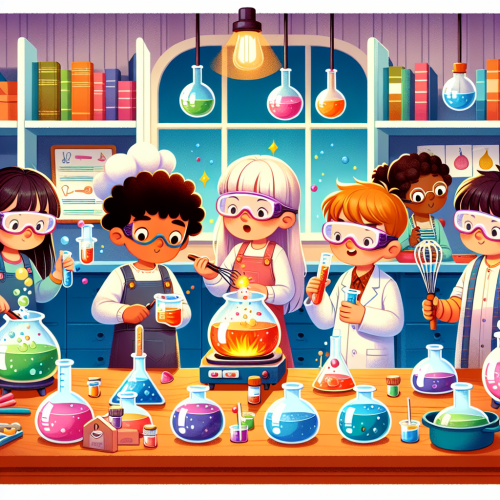
This project immerses students in the intersection of science and culinary arts, allowing them to explore and apply scientific principles through hands-on cooking experiments. By engaging with local chefs and community partners, students will deepen their understanding of how temperature, chemical reactions, and ingredient interactions transform raw ingredients into delicious dishes. Over six weeks, students will develop critical thinking, problem-solving skills, and self-directed learning as they experiment, reflect, and innovate traditional recipes, culminating in a showcase of their culinary creations and scientific insights.
Learning goals
Students will develop a deep understanding of the scientific principles involved in cooking, such as chemical reactions and the effects of temperature on food. They will apply the scientific method to design and conduct culinary experiments, fostering critical thinking and problem-solving skills. Through collaboration with community partners and peer discussions, students will enhance their self-directed learning and academic mindset, ultimately creating a recipe book and educational videos that demonstrate their knowledge and creativity.
Standards
[Next Generation Science Standards] HS-PS1-5 - Apply scientific principles and evidence to provide an explanation about the effects of changing the temperature or concentration of the reacting particles on the rate at which a reaction occurs.
[Next Generation Science Standards] MS-LS1-7 - Develop a model to describe how food is rearranged through chemical reactions forming new molecules that support growth and/or release energy as this matter moves through an organism.
[Next Generation Science Standards] MS-LS1-7 - Develop a model to describe how food is rearranged through chemical reactions forming new molecules that support growth and/or release energy as this matter moves through an organism.
Competencies
Self Directed Learning - Students use teacher and peer feedback and self-reflection to monitor and direct their own learning while building self knowledge both in and out of the classroom.
Academic Mindset - Students establish a sense of place, identity, and belonging to increase self-efficacy while engaging in critical reflection and action.
Critical Thinking & Problem Solving - Students consider a variety of innovative approaches to address and understand complex questions that are authentic and important to their communities.
Products
Throughout the project, students will develop a recipe book featuring their own culinary creations, emphasizing the scientific principles they explored. They will also produce educational cooking videos, demonstrating the science behind their favorite dishes and showcasing their experimentation process. At the end of the project, students will present their work at the 'Science of Cooking Fair,' where they will share their recipes and videos with peers, teachers, and community partners.
Launch
Begin the project with a "Culinary Science Day," where students participate in a hands-on cooking workshop led by a local chef. They will explore basic cooking techniques such as mixing, heating, and seasoning, while the chef explains the scientific principles behind each process. Students will then form groups to brainstorm and select a traditional recipe they wish to experiment with, setting the stage for their six-week exploration into the science of cooking.
Exhibition
At the conclusion of the project, students will host a 'Science of Cooking Fair' where they showcase their culinary creations and the scientific principles behind them. Each student will present their recipe book and educational cooking videos, highlighting their experimentation and learning process. The fair will include interactive stations where attendees can taste the dishes, watch cooking demonstrations, and engage with students about their findings. Feedback from peers, teachers, and community partners will be encouraged to deepen students' reflection on their learning journey.