All grades  Project 4 weeks

"Medieval Melodies: A Journey Through Verse"

idania m
CCSS.ELA-Literacy.RL.11-12.9
CCSS.ELA-Literacy.RL.11-12.7
CCSS.ELA-Literacy.RL.7.5
Self Directed Learning
Academic Mindset
+ 1 more
1-pager

Purpose

The purpose of this learning experience is to immerse students in the rich tapestry of medieval lyrical literature, fostering an appreciation for its influence on modern poetry. Through creative writing, theatrical performances, and multimedia presentations, students will explore the evolution of poetic forms, enhancing critical thinking and self-directed learning. By connecting with community partners and engaging in reflective practices, students will deepen their understanding of historical and contemporary literary expressions, cultivating a sense of identity and belonging within the literary world.

Learning goals

Students will develop creative writing skills by composing original poems inspired by medieval lyrical styles, integrating elements like rhyme schemes and themes from historical works. They will enhance their critical thinking and problem-solving abilities by analyzing and comparing medieval and modern poetic forms, ultimately crafting theatrical performances that reinterpret these works in a contemporary context. Through peer feedback and self-reflection, students will cultivate self-directed learning and an academic mindset, fostering a sense of identity and belonging. Additionally, they will engage with the community by presenting their projects at a local library exhibition, connecting past and present literary expressions.
Standards
  • [Common Core] CCSS.ELA-Literacy.RL.11-12.9 - Demonstrate knowledge of eighteenth-, nineteenth- and early-twentieth-century foundational works of American literature, including how two or more texts from the same period treat similar themes or topics.
  • [Common Core] CCSS.ELA-Literacy.RL.11-12.7 - Analyze multiple interpretations of a story, drama, or poem (e.g., recorded or live production of a play or recorded novel or poetry), evaluating how each version interprets the source text. (Include at least one play by Shakespeare and one play by an American dramatist.)
  • [Common Core] CCSS.ELA-Literacy.RL.7.5 - Analyze how a drama's or poem's form or structure (e.g., soliloquy, sonnet) contributes to its meaning.
Competencies
  • Self Directed Learning - Students use teacher and peer feedback and self-reflection to monitor and direct their own learning while building self knowledge both in and out of the classroom.
  • Academic Mindset - Students establish a sense of place, identity, and belonging to increase self-efficacy while engaging in critical reflection and action.
  • Critical Thinking & Problem Solving - Students consider a variety of innovative approaches to address and understand complex questions that are authentic and important to their communities.

Products

Students will create original poems inspired by medieval lyrical styles, incorporating elements like rhyme schemes and themes from works such as 'El Cantar de Mio Cid' and 'La Celestina'. They will also develop short theatrical performances that reinterpret these medieval works in a modern context, engaging in scriptwriting, acting, and stage design. The project will culminate in a live or recorded presentation, showcasing their creative interpretations and understanding of the evolution of lyrical forms.

Launch

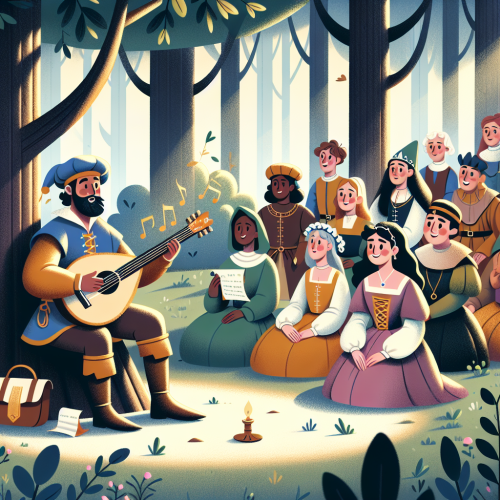
Kick off the project with a 'Scrolls and Screens Storytelling Circle,' where students gather in costume to share narratives about medieval poets' lives. Use props to recreate the historical setting, sparking creativity and curiosity. This immersive experience will set the stage for exploring how medieval lyrical forms influence modern poetry, encouraging students to connect with the material and each other.

Exhibition

Students will showcase their creative works in "From Scrolls to Screens: A Literary Exhibition" at the local library. This interactive exhibition will feature digital displays and virtual reality experiences, allowing guests to explore the evolution of lyrical forms from medieval to modern times. Students will present their multimedia comparisons and perform their theatrical reinterpretations, engaging the community in a celebration of literature's rich history and its contemporary connections.