High School Grade
Project
3 weeks
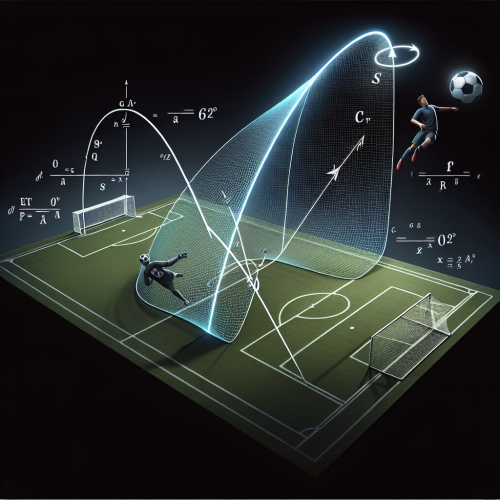
Soccer Trajectories: Scoring with Quadratic Equations
Updated
CCSS.Math.Content.HSA-CED.A.1
CCSS.Math.Content.HSA-REI.B.4
CCSS.Math.Content.HSF-BF.A.1
CCSS.Math.Content.HSF-IF.B.4
CCSS.Math.Content.HSF-IF.C.7
1-pager
Project Activities
Days 1–12
Day 1
Activity 1: Introduction to the project at the local soccer field. Students observe and record videos of soccer balls being kicked at various angles and speeds. They take notes on the observed characteristics of the ball's trajectory.
Activity
Activity 1: Launch the project with the Quadratic Function Scavenger Hunt. Students will work in teams to solve clues that integrate soccer scenarios and quadratic concepts, discovering real-world applications of quadratic functions in sports.
Activity
Activity 1: Soccer Ball Trajectory Challenge
Activity
Visit a local soccer field to observe and record the trajectory of soccer balls kicked at different angles and speeds. Students take notes on their observations, focusing on how angle and speed affect the ball's path.
Activity
Day 2
Activity 2: In-class analysis session where students review their recorded videos. They identify initial patterns in the soccer ball's path and discuss these observations in small groups.
Activity
Activity 2: Introduction to Quadratic Functions
Activity
Facilitate a class discussion to analyze the observations from the field trip. Introduce the concept of quadratic functions and how they can model the trajectory of a soccer ball.
Activity
Activity 2: Introduction to Quadratic Functions. Conduct a hands-on session where students explore vertex form and standard form of quadratic equations using interactive software or graphing calculators.
Activity
Day 3
Activity 3: Group Discussion and Brainstorming. Facilitate a class discussion on how quadratic functions can be applied to predict the path of a soccer ball. Encourage students to brainstorm potential variables affecting the ball's trajectory.
Activity
Engage students in a hands-on activity where they use graph paper and rulers to sketch basic parabolic paths, experimenting with different angles and initial speeds to understand how these variables impact the trajectory.
Activity
Activity 3: Introduction to quadratic functions. Students explore the basic concepts of quadratic equations and graphs through interactive software or a graphing calculator.
Activity
Activity 3: Exploring Vertex and Standard Forms
Activity
Day 4
Activity 4: Hands-On Experimentation. In small groups, students will conduct initial experiments measuring the initial velocity and angle of a kicked soccer ball using protractors and stopwatches.
Activity
Activity 4: Hands-on group activity where students use simple materials (e.g., paper, string, protractor) to model a basic projectile path, connecting their observations to quadratic functions.
Activity
Introduce students to graphing software (e.g., Desmos, GeoGebra) and guide them through a tutorial on how to input quadratic functions and visualize parabolic graphs.
Activity
Activity 4: Data Collection and Initial Analysis
Activity
Day 5
Activity 1: Data Analysis and Graphing
Activity
Activity 5: Reflection and discussion session where students share their initial hypotheses on how quadratic functions relate to the observed soccer ball trajectories. They document these insights in their project journals.
Activity
In teams, have students develop initial hypotheses about the optimal angle and speed for kicking a soccer ball to achieve maximum distance or a specific trajectory. They should prepare to test these hypotheses in the coming weeks.
Activity
Conduct a lab experiment where students kick soccer balls at different angles and measure the distance traveled. Students will work in teams to collect data and calculate the initial velocity of each kick using measurements and time recordings.
Activity
Activity 5: Data Collection and Analysis. Guide students in organizing and recording their collected data. Introduce them to the process of using this data to calculate preliminary quadratic equations that model the projectile path.
Activity
Activity 1: Conduct a workshop on using graphing software to plot quadratic functions. Students practice plotting simple quadratic equations and interpreting key features of the graph, such as vertex, axis of symmetry, and intercepts.
Activity
Activity 1: Review and discuss the initial quadratic equations derived from Week 1's experiments. Encourage students to identify any discrepancies and explore potential reasons for these variations.
Activity
Day 6
Introduce the concept of quadratic regression and demonstrate how to use graphing software to input their experimental data, fitting a quadratic function to model the trajectory of the soccer ball.
Activity
Activity 2: Group activity where students analyze their recorded soccer ball trajectory data from Week 1. They calculate initial velocity, angle, and other parameters to form a basic mathematical model of the projectile motion.
Activity
Activity 2: Real-World Application Discussion
Activity
Activity 2: Introduce the concept of transforming quadratic equations between vertex form and standard form. Engage students in small group activities where they practice these transformations using their own data.
Activity
Day 7
Facilitate a group discussion where students share their findings, focusing on the relationship between angle, initial velocity, and distance. Discuss the reliability and accuracy of the quadratic models created.
Activity
Activity 3: Collaborate in small groups to create a draft digital simulation of the soccer ball trajectory using graphing software. Students apply quadratic equations to model the observed paths and refine their models based on peer feedback.
Activity
Activity 3: Conduct a deeper hands-on experiment. Students will refine their measurement techniques to gather more accurate data on the soccer ball's initial velocity and angle. Facilitate the use of technology, such as motion-tracking apps, to enhance precision.
Activity
Activity 3: Peer Review Session
Activity
Day 8
Activity 4: Guide students in recalculating their quadratic models using the refined data. Prompt them to analyze how adjustments in data collection impact the resulting equations and the predicted trajectory.
Activity
Activity 4: Teacher-Student Conferences
Activity
Activity 4: Interactive session on strategic gameplay analysis. Students discuss how understanding the trajectory of a soccer ball can enhance soccer techniques, creating a list of potential strategic insights.
Activity
Guide students through an activity to modify their quadratic models by incorporating factors such as air resistance and friction. Encourage experimentation with different parameters to optimize the model's accuracy.
Activity
Day 9
Activity 5: Reflection and peer review session. Students present their initial digital simulations and strategic insights to the class. Peers provide constructive feedback, and students document reflections in their project journals.
Activity
Activity 1: Video Presentation Development
Activity
Conduct a peer review session where students present their quadratic models and receive feedback from classmates. Students will refine their models based on peer suggestions and further analysis.
Activity
Activity 1: Advanced Graphing Workshop
Activity
Activity 5: Facilitate a peer review session. Students will present their refined models to classmates, explaining their data collection process, transformations, and analysis. Peers will provide constructive feedback to help improve each model.
Activity
Activity 1: Facilitate a workshop on modeling the projectile of a soccer ball using quadratic functions on graphing software. Students will input their refined data and visualize the trajectory.
Activity
Have students begin drafting a storyboard for their video presentations, outlining how they will explain their models and gameplay strategies. Provide feedback and suggest improvements.
Activity
Day 10
Activity 2: Data Analysis and Model Adjustment
Activity
Activity 2: Introduce students to the concept of optimization in soccer gameplay strategies. Discuss how understanding maximum height and distance can influence player decisions.
Activity
Facilitate a hands-on simulation activity using a soccer ball and a ramp to explore how varying the angle of incline affects the ball's trajectory, then compare these observations to their quadratic models.
Activity
Activity 2: Poster Creation and Design
Activity
Day 11
Guide students in incorporating real-world factors such as wind speed and surface friction into their models, using research and data analysis to adjust their equations accordingly.
Activity
Activity 3: Strategy Development Session
Activity
Activity 3: Conduct a strategic planning session where students collaborate to develop gameplay strategies based on their quadratic models, considering factors like angle and velocity.
Activity
Activity 3: Goal-Driven Gallery Walk
Activity
Day 12
Activity 4: Reflection and Feedback Session
Activity
Activity 4: Organize a simulation exercise where students test their strategies on a field, observing how well their predictions match real-world outcomes.
Activity
Introduce students to software tools for creating digital simulations, and have them begin building their own simulations that reflect their refined quadratic models of the soccer ball's trajectory.
Activity
Activity 4: Visual Representation Workshop
Activity
April 2026
Mon
Tue
Wed
Thu
Fri
13
Day 1
Project Activities
Activity 1: Introduction to the project at the local soccer field. Students observe and record videos of soccer balls being kicked at various angles and speeds. They take notes on the observed characteristics of the ball's trajectory.
Activity 1: Launch the project with the Quadratic Function Scavenger Hunt. Students will work in teams to solve clues that integrate soccer scenarios and quadratic concepts, discovering real-world applications of quadratic functions in sports.
Activity 1: Soccer Ball Trajectory Challenge
Visit a local soccer field to observe and record the trajectory of soccer balls kicked at different angles and speeds. Students take notes on their observations, focusing on how angle and speed affect the ball's path.
14
Day 2
Activity 2: In-class analysis session where students review their recorded videos. They identify initial patterns in the soccer ball's path and discuss these observations in small groups.
Activity 2: Introduction to Quadratic Functions
Facilitate a class discussion to analyze the observations from the field trip. Introduce the concept of quadratic functions and how they can model the trajectory of a soccer ball.
Activity 2: Introduction to Quadratic Functions. Conduct a hands-on session where students explore vertex form and standard form of quadratic equations using interactive software or graphing calculators.
15
Day 3
Activity 3: Group Discussion and Brainstorming. Facilitate a class discussion on how quadratic functions can be applied to predict the path of a soccer ball. Encourage students to brainstorm potential variables affecting the ball's trajectory.
Engage students in a hands-on activity where they use graph paper and rulers to sketch basic parabolic paths, experimenting with different angles and initial speeds to understand how these variables impact the trajectory.
Activity 3: Introduction to quadratic functions. Students explore the basic concepts of quadratic equations and graphs through interactive software or a graphing calculator.
Activity 3: Exploring Vertex and Standard Forms
16
Day 4
Activity 4: Hands-On Experimentation. In small groups, students will conduct initial experiments measuring the initial velocity and angle of a kicked soccer ball using protractors and stopwatches.
Activity 4: Hands-on group activity where students use simple materials (e.g., paper, string, protractor) to model a basic projectile path, connecting their observations to quadratic functions.
Introduce students to graphing software (e.g., Desmos, GeoGebra) and guide them through a tutorial on how to input quadratic functions and visualize parabolic graphs.
Activity 4: Data Collection and Initial Analysis
20
Day 5
Activity 1: Data Analysis and Graphing
Activity 5: Reflection and discussion session where students share their initial hypotheses on how quadratic functions relate to the observed soccer ball trajectories. They document these insights in their project journals.
In teams, have students develop initial hypotheses about the optimal angle and speed for kicking a soccer ball to achieve maximum distance or a specific trajectory. They should prepare to test these hypotheses in the coming weeks.
Conduct a lab experiment where students kick soccer balls at different angles and measure the distance traveled. Students will work in teams to collect data and calculate the initial velocity of each kick using measurements and time recordings.
Activity 5: Data Collection and Analysis. Guide students in organizing and recording their collected data. Introduce them to the process of using this data to calculate preliminary quadratic equations that model the projectile path.
Activity 1: Conduct a workshop on using graphing software to plot quadratic functions. Students practice plotting simple quadratic equations and interpreting key features of the graph, such as vertex, axis of symmetry, and intercepts.
Activity 1: Review and discuss the initial quadratic equations derived from Week 1's experiments. Encourage students to identify any discrepancies and explore potential reasons for these variations.
21
Day 6
Introduce the concept of quadratic regression and demonstrate how to use graphing software to input their experimental data, fitting a quadratic function to model the trajectory of the soccer ball.
Activity 2: Group activity where students analyze their recorded soccer ball trajectory data from Week 1. They calculate initial velocity, angle, and other parameters to form a basic mathematical model of the projectile motion.
Activity 2: Real-World Application Discussion
Activity 2: Introduce the concept of transforming quadratic equations between vertex form and standard form. Engage students in small group activities where they practice these transformations using their own data.
22
Day 7
Facilitate a group discussion where students share their findings, focusing on the relationship between angle, initial velocity, and distance. Discuss the reliability and accuracy of the quadratic models created.
Activity 3: Collaborate in small groups to create a draft digital simulation of the soccer ball trajectory using graphing software. Students apply quadratic equations to model the observed paths and refine their models based on peer feedback.
Activity 3: Conduct a deeper hands-on experiment. Students will refine their measurement techniques to gather more accurate data on the soccer ball's initial velocity and angle. Facilitate the use of technology, such as motion-tracking apps, to enhance precision.
Activity 3: Peer Review Session
23
Day 8
Activity 4: Guide students in recalculating their quadratic models using the refined data. Prompt them to analyze how adjustments in data collection impact the resulting equations and the predicted trajectory.
Activity 4: Teacher-Student Conferences
Activity 4: Interactive session on strategic gameplay analysis. Students discuss how understanding the trajectory of a soccer ball can enhance soccer techniques, creating a list of potential strategic insights.
Guide students through an activity to modify their quadratic models by incorporating factors such as air resistance and friction. Encourage experimentation with different parameters to optimize the model's accuracy.
27
Day 9
Activity 5: Reflection and peer review session. Students present their initial digital simulations and strategic insights to the class. Peers provide constructive feedback, and students document reflections in their project journals.
Activity 1: Video Presentation Development
Conduct a peer review session where students present their quadratic models and receive feedback from classmates. Students will refine their models based on peer suggestions and further analysis.
Activity 1: Advanced Graphing Workshop
Activity 5: Facilitate a peer review session. Students will present their refined models to classmates, explaining their data collection process, transformations, and analysis. Peers will provide constructive feedback to help improve each model.
Activity 1: Facilitate a workshop on modeling the projectile of a soccer ball using quadratic functions on graphing software. Students will input their refined data and visualize the trajectory.
Have students begin drafting a storyboard for their video presentations, outlining how they will explain their models and gameplay strategies. Provide feedback and suggest improvements.
28
Day 10
Activity 2: Data Analysis and Model Adjustment
Activity 2: Introduce students to the concept of optimization in soccer gameplay strategies. Discuss how understanding maximum height and distance can influence player decisions.
Facilitate a hands-on simulation activity using a soccer ball and a ramp to explore how varying the angle of incline affects the ball's trajectory, then compare these observations to their quadratic models.
Activity 2: Poster Creation and Design
29
Day 11
Guide students in incorporating real-world factors such as wind speed and surface friction into their models, using research and data analysis to adjust their equations accordingly.
Activity 3: Strategy Development Session
Activity 3: Conduct a strategic planning session where students collaborate to develop gameplay strategies based on their quadratic models, considering factors like angle and velocity.
Activity 3: Goal-Driven Gallery Walk
30
Day 12
Activity 4: Reflection and Feedback Session
Activity 4: Organize a simulation exercise where students test their strategies on a field, observing how well their predictions match real-world outcomes.
Introduce students to software tools for creating digital simulations, and have them begin building their own simulations that reflect their refined quadratic models of the soccer ball's trajectory.
Activity 4: Visual Representation Workshop