6th Grade  Project 2 weeks

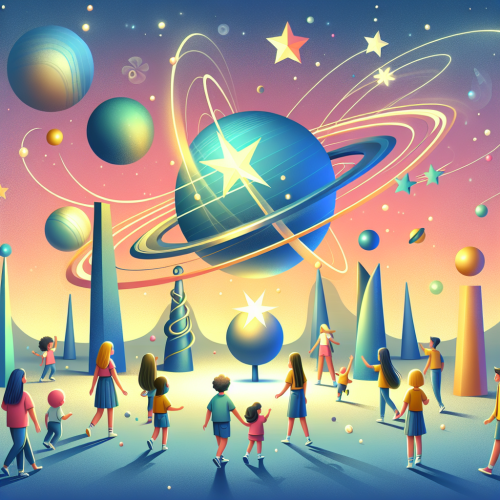
"StarStruck Sculptures: Cosmic Creations Unleashed!"

John D
MS-ESS1-1
Self Directed Learning
Academic Mindset
Critical Thinking & Problem Solving
1-pager

Purpose

Students will explore the intricate relationships within the Earth-sun-moon system by designing and constructing their own monuments that visually and functionally represent celestial phenomena. Through this hands-on project, students will deepen their understanding of cyclic patterns such as lunar phases, eclipses, and seasons, while honing their skills in self-directed learning, critical thinking, and problem-solving. By engaging in collaborative reflection and showcasing their creations, students will connect scientific concepts to their personal identities and community contexts, fostering a sense of belonging and academic mindset.

Learning goals

Students will explore celestial-based monuments and understand their historical significance and scientific accuracy in representing the Earth-sun-moon system. By developing their own monument models, students will deepen their comprehension of cyclic patterns such as lunar phases, eclipses, and seasons. Through self-directed learning and critical reflection, students will enhance their academic mindset and problem-solving skills, fostering a sense of belonging and identity within the learning community.
Standards
  • [Next Generation Science Standards] MS-ESS1-1 - Develop and use a model of the Earth-sun-moon system to describe the cyclic patterns of lunar phases, eclipses of the sun and moon, and seasons.
Competencies
  • Self Directed Learning - Students use teacher and peer feedback and self-reflection to monitor and direct their own learning while building self knowledge both in and out of the classroom.
  • Academic Mindset - Students establish a sense of place, identity, and belonging to increase self-efficacy while engaging in critical reflection and action.
  • Critical Thinking & Problem Solving - Students consider a variety of innovative approaches to address and understand complex questions that are authentic and important to their communities.

Products

Students will create a replica model of celestial-based architecture, inspired by historical monuments that align with astronomical phenomena, such as those found in Teotihuacan. These models will incorporate innovative design elements that reflect the cyclic patterns of the Earth-sun-moon system, including lunar phases, eclipses, and seasons. Throughout the project, students will engage in iterative design processes, using feedback and self-reflection to refine their models to accurately represent the scientific concepts.

Launch

To kick off the project, organize a virtual tour of Teotihuacan, highlighting its celestial-based architecture and historical significance. Follow this with a hands-on activity where students use simple materials to model the Earth-sun-moon system, observing how their interactions create lunar phases and eclipses. Encourage students to brainstorm initial ideas for their monuments, considering how they might incorporate these celestial patterns into their designs.

Exhibition

Students will showcase their celestial monument models in a classroom exhibition, inviting peers, teachers, and community members to explore their creations. Each student will present their model, explaining the scientific concepts and cyclic patterns of the Earth-sun-moon system it represents. The exhibition will include interactive demonstrations where students narrate the functionality of their monuments and answer questions from attendees. This event will foster a collaborative learning environment, allowing students to receive feedback and reflect on their design choices.